

SOSX Circularity
The whole life cycle. Every system it touches.
The whole product life cycle and the connected systems that affect it, as one model: whether a loop closes is a whole-system property, and the model shows it, with life cycle assessment as one of its reports.
The problems it solves
- “The loop looks closed on paper, but it leaks at one reprocessor.”
- “We’ve signed a recycled-content target the supply side may not be able to meet.”
- “One take-back route carries everything, and we’d hear it had failed months late.”
- “We can’t evidence the circular claims we make.”
SOSX Circularity: Will your loop actually close?
See SOSX Circularity at work
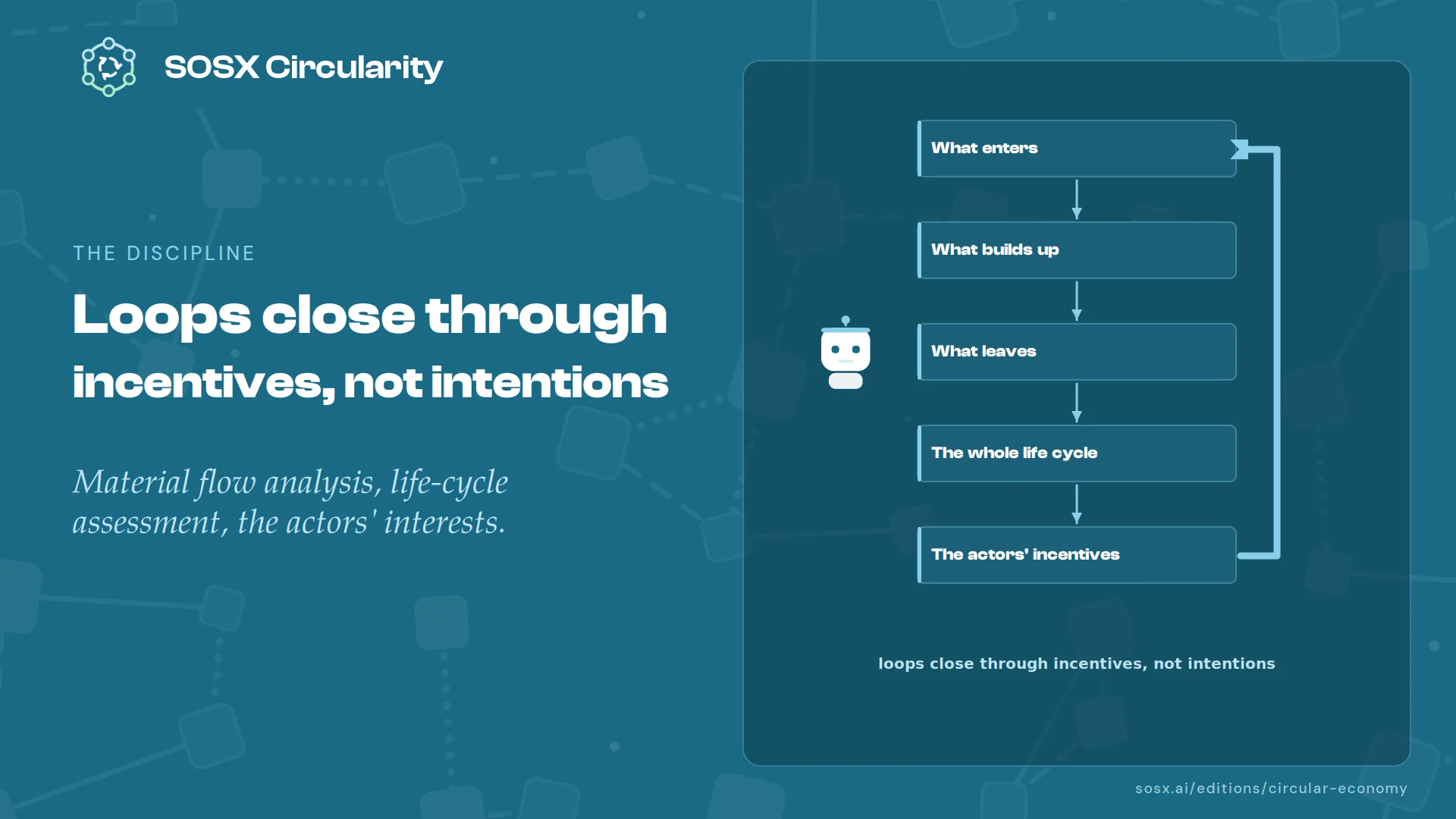
The established practice: material flow analysis, life-cycle assessment and the actors' incentives. 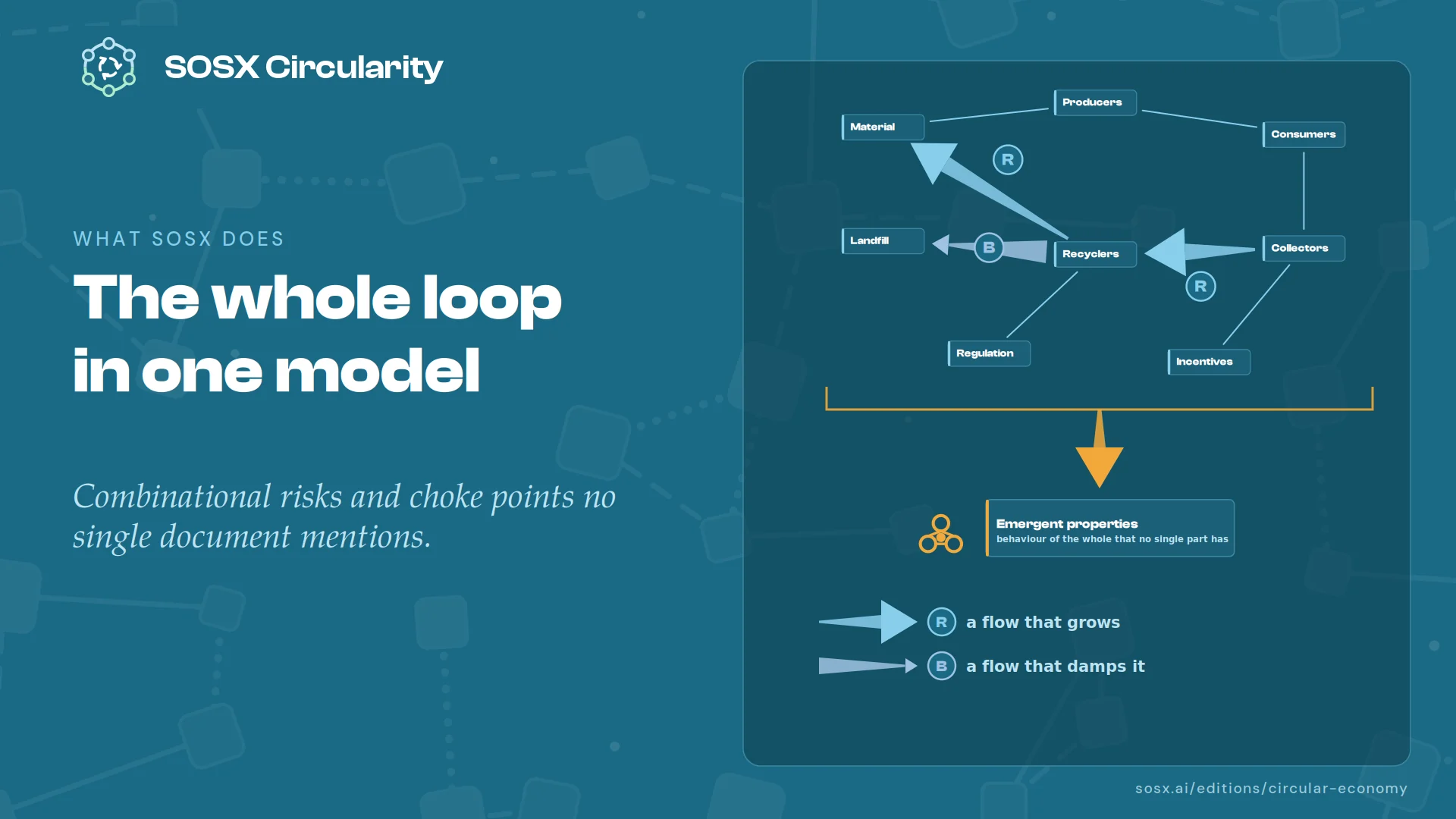
The whole loop as one connected model, with incentives and regulation inside the network. 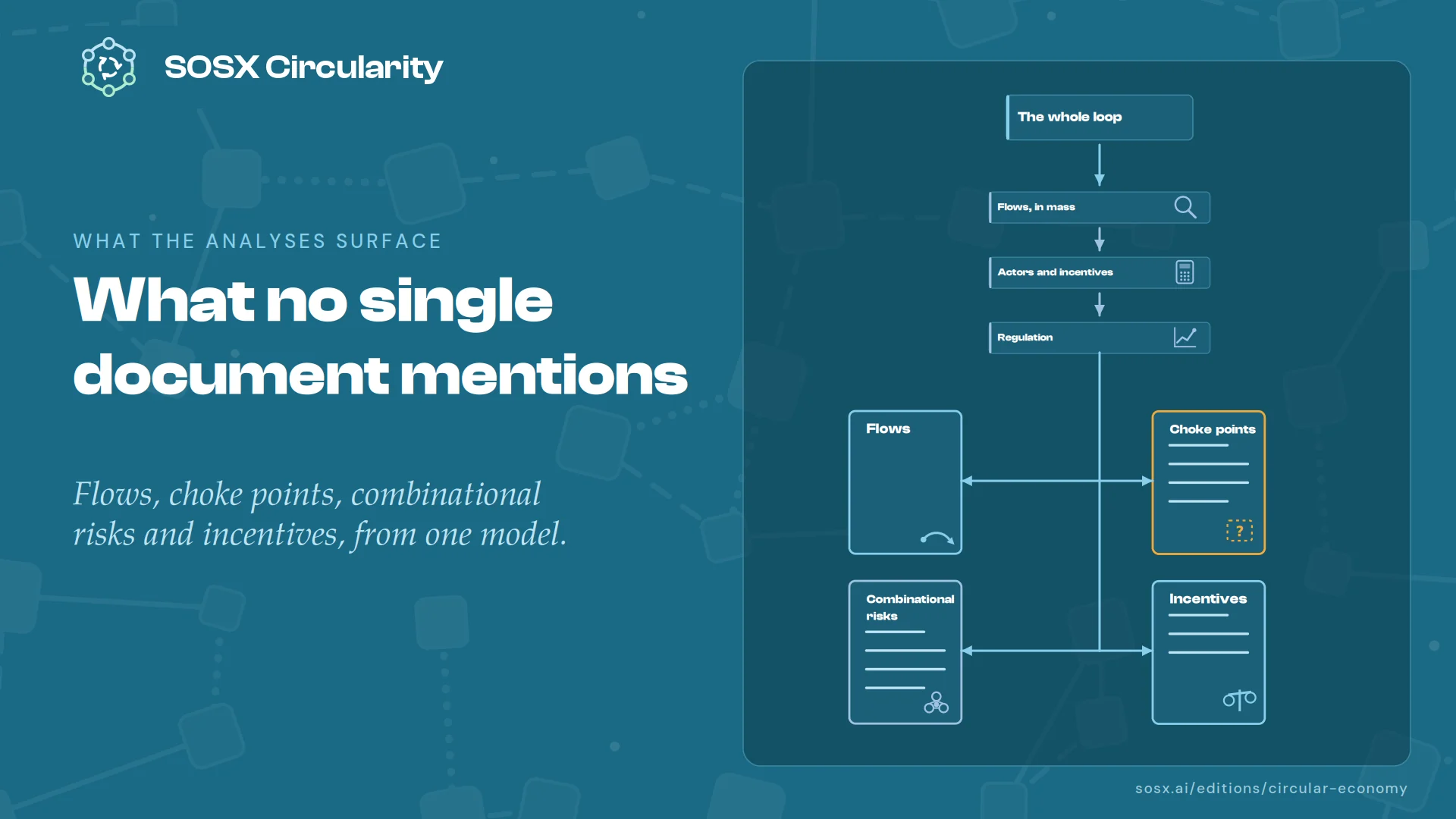
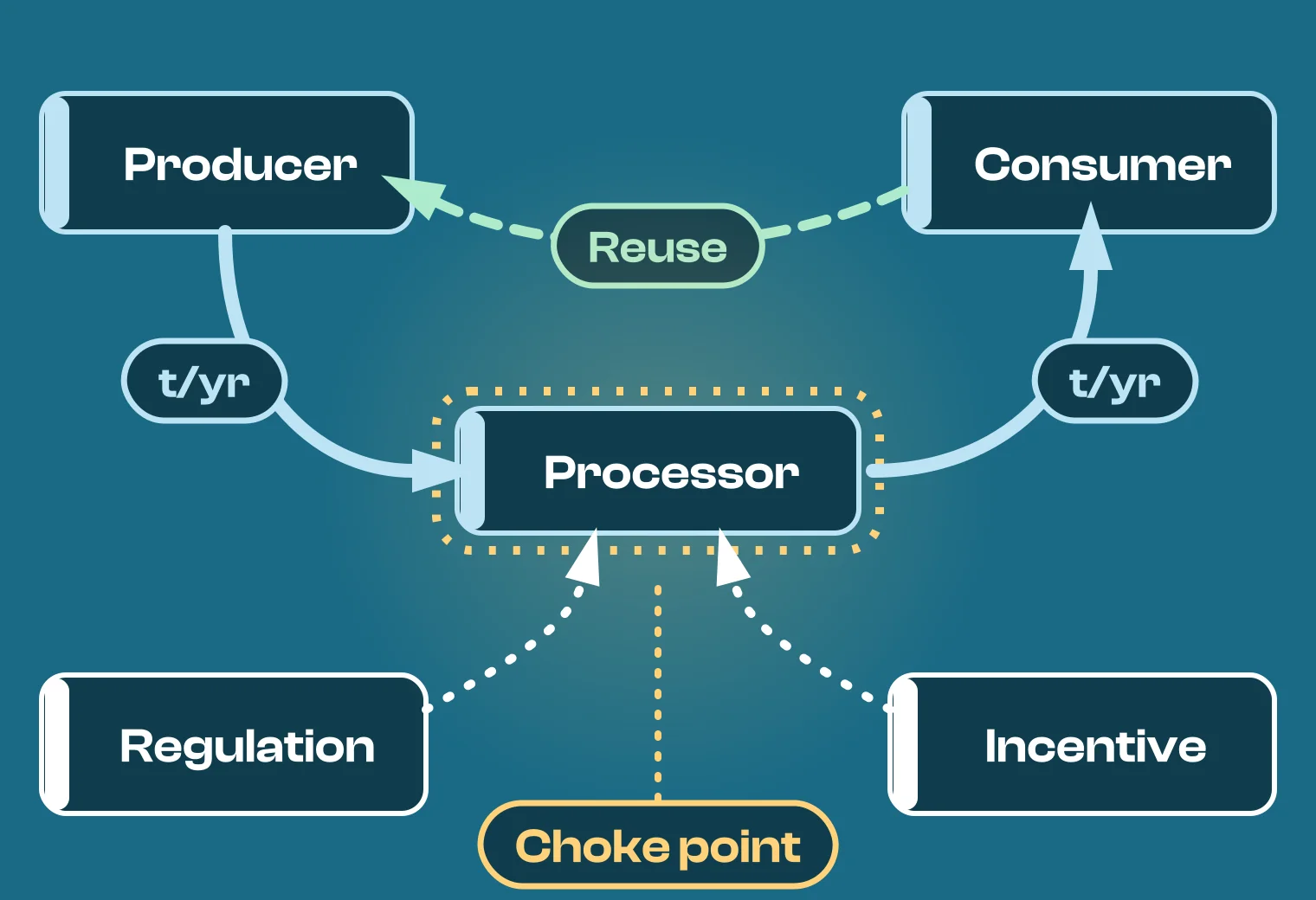
One model of the loop, read out as flows, choke points, combinational risks and incentives. 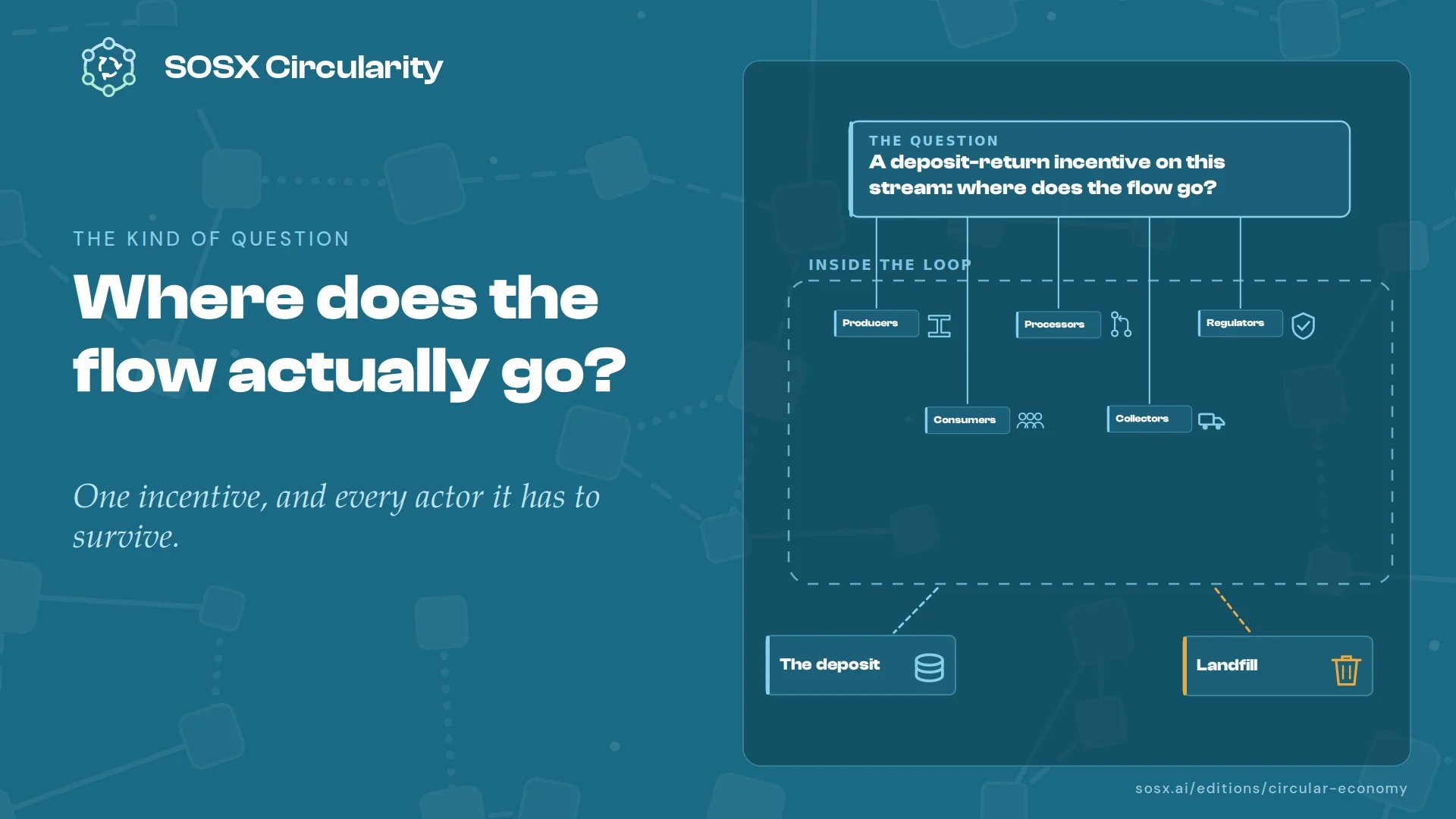
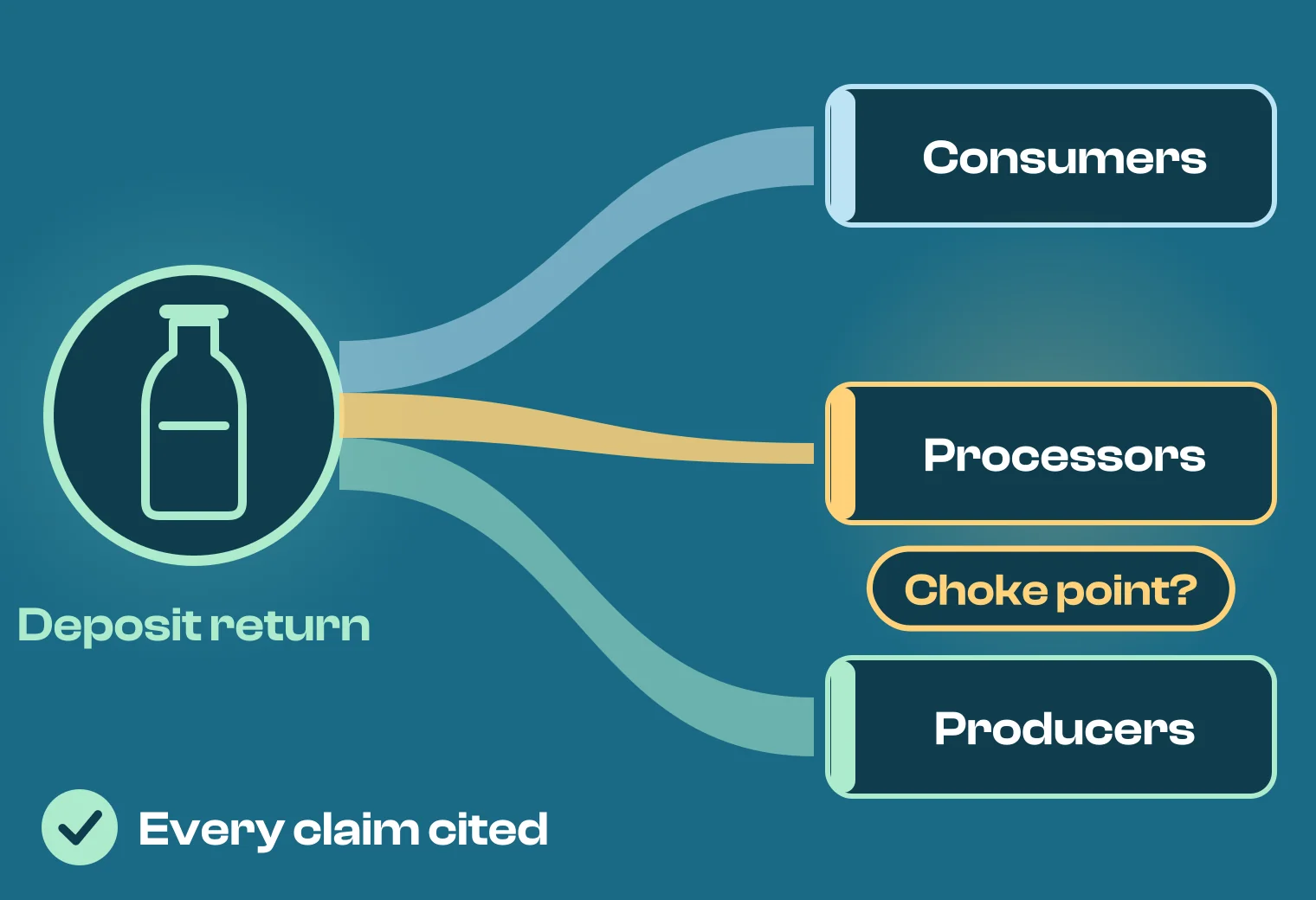
One deposit-return question reaches producers, processors, regulators and consumers at once. 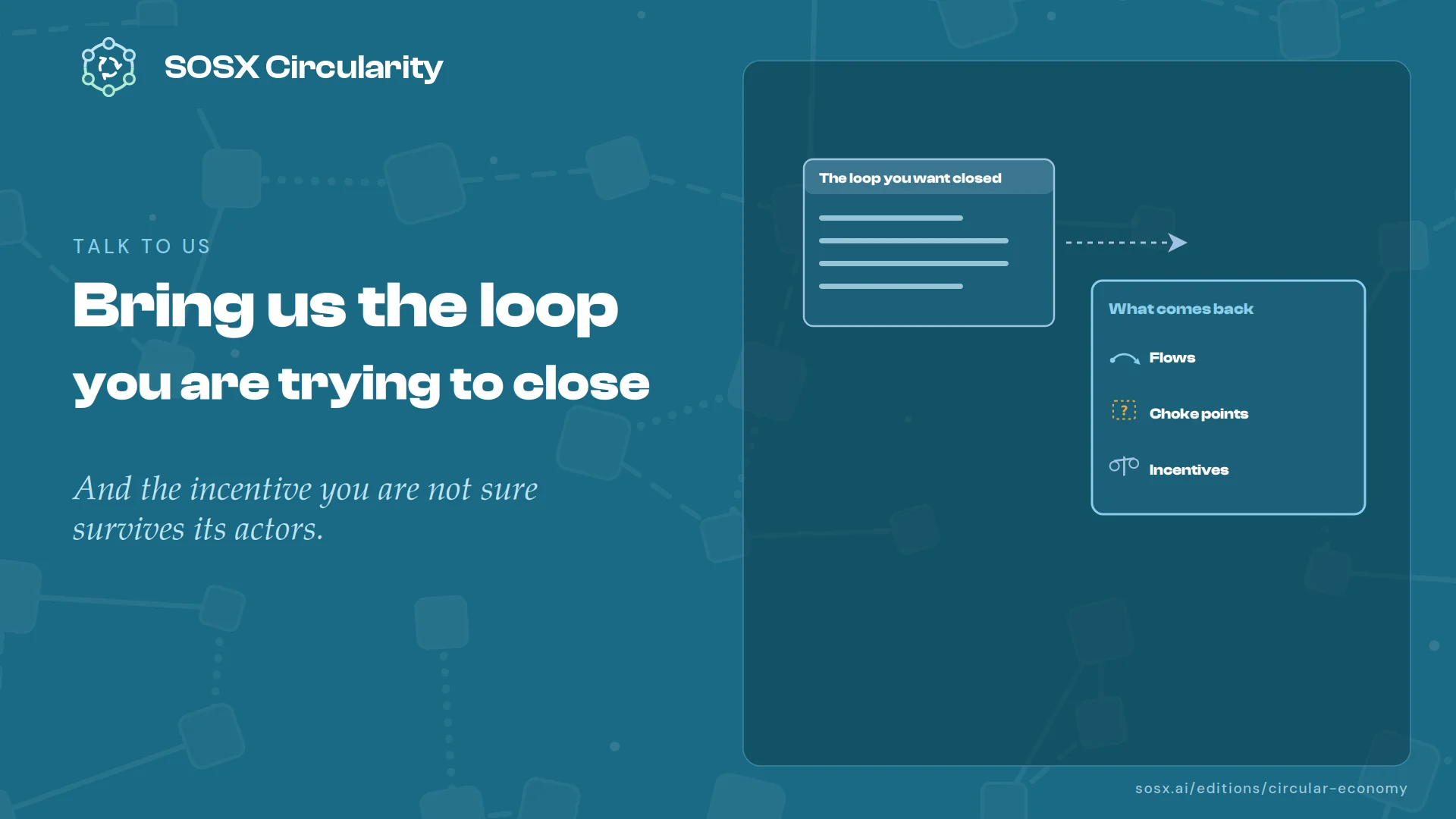
Bring us the loop you are trying to close.
How SOSX helps
Research
Specialised agents research the question, every claim citing a source.
Build
One typed, connected network, every value with its units and confidence.
Analyse
What-if, feedback loops, dependencies, trade-offs, risk and ROI.
Report
SWOTs, risk registers and decision reports, red-teamed before you see them.
The detail
For when you want the whole argument.
Read moreWhat SOSX Circularity does
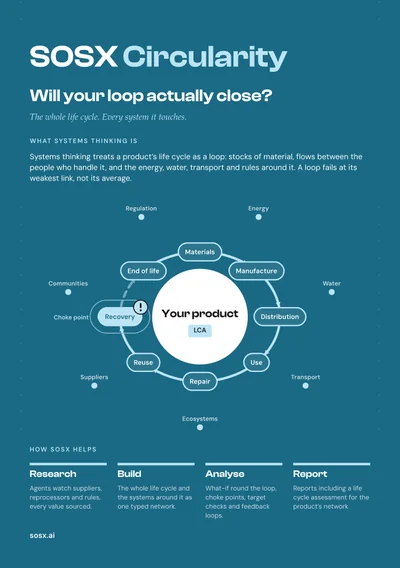
SOSX Circularity maps the whole life cycle of a product, from materials and manufacture through use, repair, reuse and recovery, and the connected environments and systems that affect it: suppliers, processors, collectors, customers, incentives and regulation. Circularity problems are systems-thinking problems by definition, with the feedback loops and choke points that decide whether a loop actually closes.
The whole life cycle is modelled as one connected system, powered by the same production-grade engine behind every SOSX product, with the flows, the incentives and the actors held in one model rather than three spreadsheets that disagree. Life cycle assessment (LCA) is one of the reports it produces for a product's network, alongside the flows, the choke points and the combinational risks.
Read moreThe discipline: how circularity is actually assessed
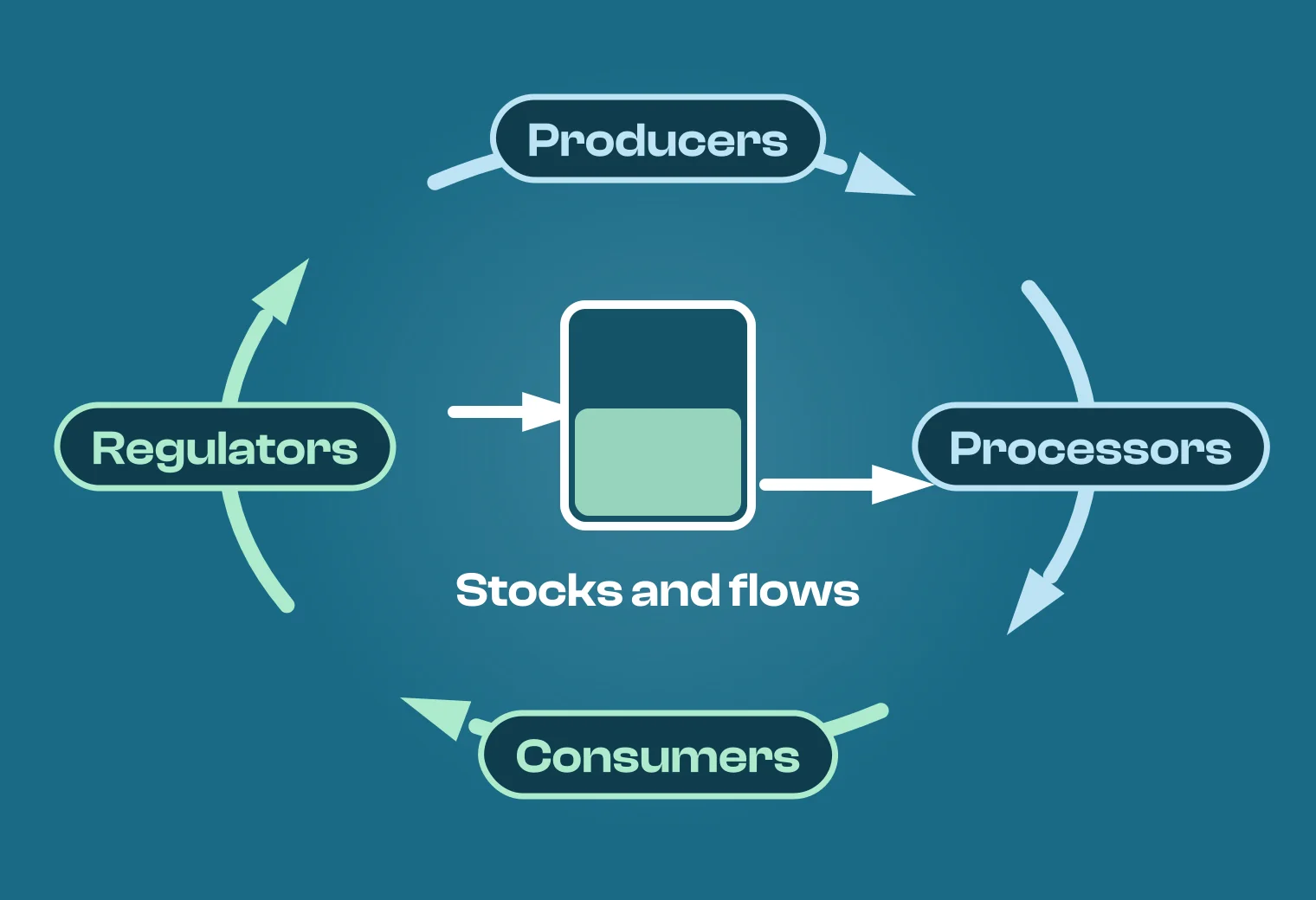
There is an established practice here and it is worth stating before any proposition of ours. Material flow analysis first: what enters, what accumulates, what leaves, and in what state, stocks and flows are the native language of materials, and most circular arguments fall over because somebody counted a rate instead of a mass. Life-cycle assessment has a standards lineage of its own (ISO 14040 and the environmental management systems around ISO 14001), which is what stops a loop being declared closed because one hop of it looks good. Map the actors, their power and their interest, because loops close through incentives rather than intentions, Axelrod's work on cooperation and tit-for-tat is the right lens for take-back schemes and producer responsibility, where the question is whether cooperating stays rational after the pilot funding ends. Appraise the whole benefit, including the effects nobody prices. And treat distributive justice seriously across generations, in the Rawlsian sense: some losses are recoverable and some are not, and the difference belongs in the appraisal rather than in the foreword.
All of this can be done, and is done, without software. The difficulty is that a loop spans producers, processors, regulators and consumers who each hold one part of the evidence, and the assessment goes stale the moment a regulation or a price moves. The expensive part is not drawing the loop: it is building it and keeping it true.
Read moreWhy the engine fits the problem
The platform models exactly this shape of problem, here as in its other domains. Flows between typed actors, carried on unit-aware parameters; incentives and regulation as part of the network rather than a footnote to it; analyses that surface the emergent properties: the combinational risks and choke points no single document mentions. Whether a loop closes is a whole-system property, and whole-system properties are what the engine is for.
Read moreThe kind of question we mean
If this material stream gained a deposit-return incentive, where does the flow actually go, and which actor becomes the choke point? A question like that spans producers, processors, regulators and consumers at once. Working it as one connected model, with every claim cited and every assumption inspectable, is what SOSX does here.
Free to download
Go deeper
Bring us a product
If you are assembling a consortium or working a systemic circularity question, bring us the product whose life cycle you are trying to close and the incentive you are not sure survives contact with its actors.
Send us your question and let's have a chat.