SOSX®, AI-enabled systems thinking, for any sector.
Analysis tools
One model, and the questions you can put to it
A model is not the point. The point is what you can ask it.
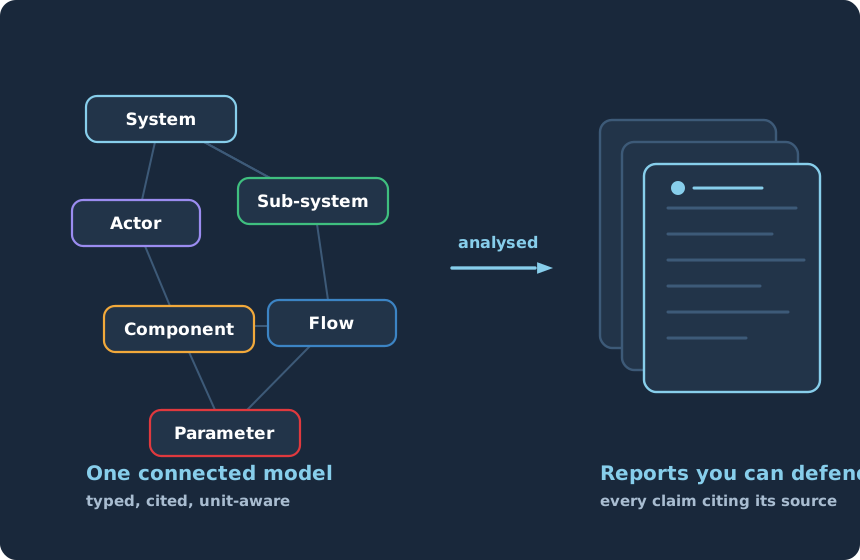
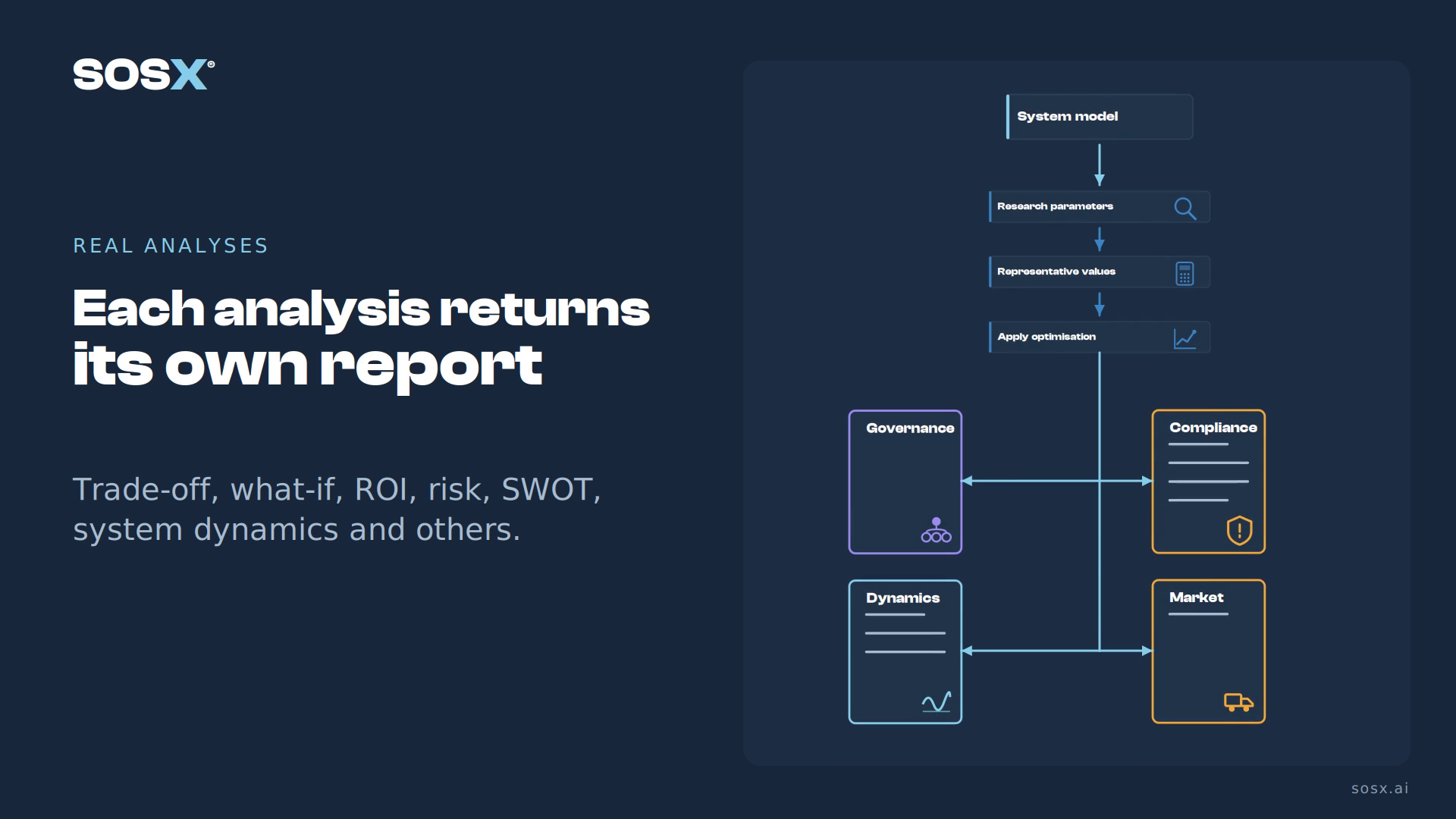
SOSX builds one connected model of the thing you are deciding about, and then runs real analyses over it: the trade-off study, the risk register, the financial case, the scenario, the governance map. Each one produces a report you could hand to a review board, grounded in unit-aware parameters, with every claim citing a source you can open.
They are worth more together than apart, and that is the argument for building the model once. The same network answers the finance question and the risk question, so the two answers cannot quietly disagree.
Choosing between options
Several routes are on the table and one of them has to be argued for.
Trade-off analysis
“Which option wins, and what does it cost us elsewhere?”
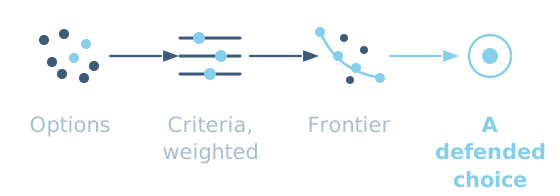
Multi-objective comparison across systems or scenarios, with the Pareto frontier drawn and the sensitivity caveats attached.
Compare models
“Which AI model does this work best?”
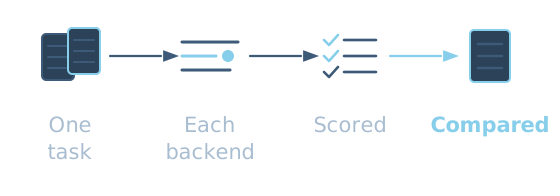
The same task on the same network, run by several AI backends, with time, cost, carbon and output quality set side by side.
Comparative study
“How do these options compare, fairly?”
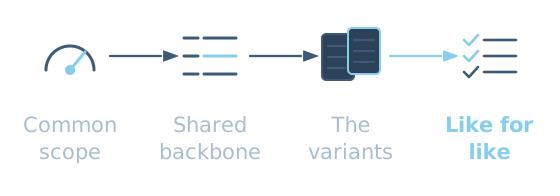
Several variants built to one shared backbone, so the comparison is like for like rather than six differently-shaped models nobody can line up.
Product explorer
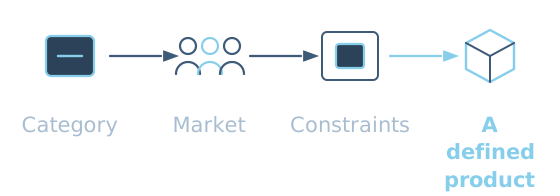
“What should this product actually be?”
A guided exploration of category, market, performance, constraints and design trade-offs, held inside the network.
Testing a change
Something in the system moves, and you need to know what moves with it.
What-if analysis
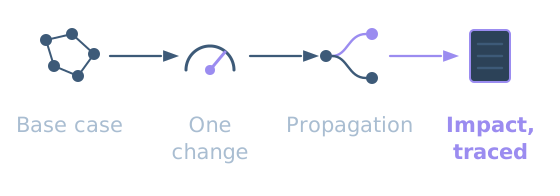
“What happens if we change this one thing?”
A hypothetical change written into a scenario copy of the network, and the impact traced through the feedback loops.
Deep analysis
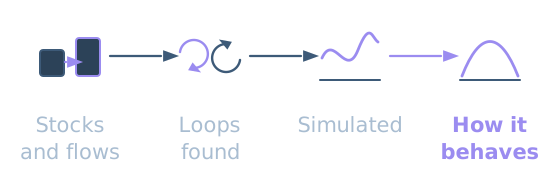
“How does this system actually behave over time?”
System dynamics: the reinforcing and balancing loops, how they interact, the emergent properties no single part accounts for, and where the system is brittle.
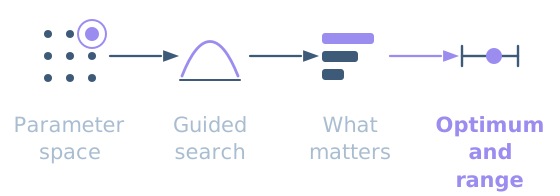
Bayesian optimisation
“What settings give us the best outcome?”
Network parameters optimised, ranked by how much each one moves the objective, with the uncertainty quantified.
Putting money on it
The case has to survive a finance review, not just a workshop.
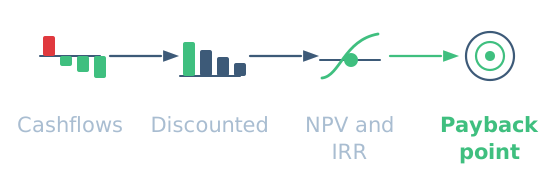
ROI analysis
“Does the money work, and when?”
Net present value, internal rate of return, payback and profitability index over the horizon you set.
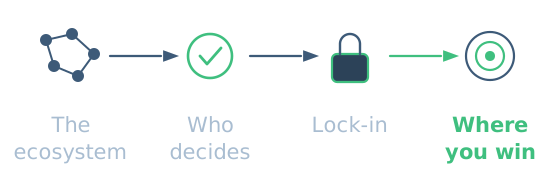
Market analysis
“Who else is in this, and who decides?”
Demand, segmentation, the competitive landscape, who holds procurement authority, and where the lock-in sits.
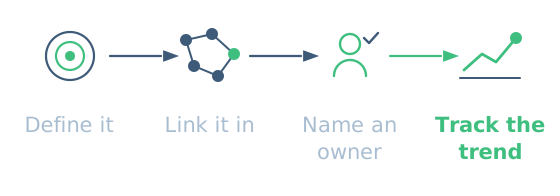
KPI tracker
“What are we measuring, and who owns it?”
Performance measures defined against the model, with targets, trend and a named owner for each one.
Defending the answer
Someone will ask how you know. These are the analyses that answer them.
Risk register
“What could go wrong, and how badly?”
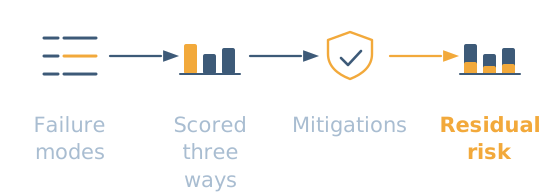
Severity, occurrence and detection in the FMEA style, scored before and after the mitigations you propose.
SWOT
“Where are we strong, and where are we exposed?”
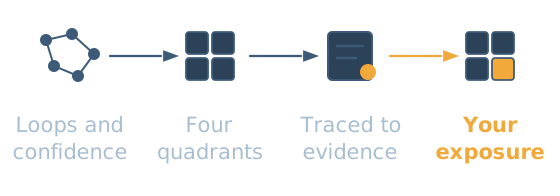
The familiar four quadrants, but built out of the model's loops and confidence levels rather than a workshop's memory.
Governance analysis
“Who decides this, and who has to be told?”
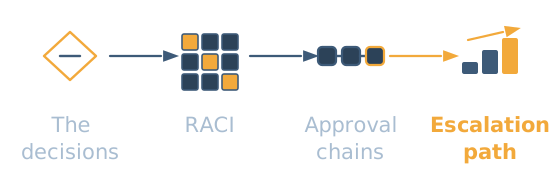
Decision rights, accountability and escalation paths, as a RACI matrix and the approval chains behind it.
Compliance analysis
“What does the audit trail show, framework by framework?”
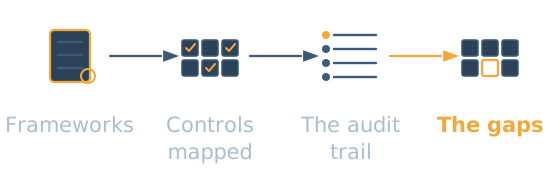
SOSX's own audit evidence for a network, scored control by control against the governance frameworks it aligns with. Alignment, not certification.
Network quality critique
“How much should we trust this model?”
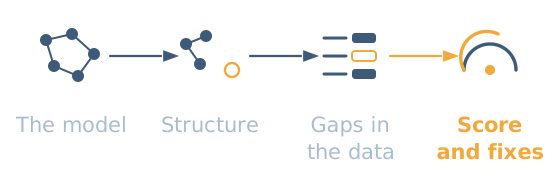
Centrality, single points of failure, orphans and coverage gaps, scored, with the fixes ranked by what they buy you.
Which ones do I need?
Usually fewer than you would think, and rarely the ones people ask for first. The right set falls out of the question, so that is where we would rather start. Bring us the decision you are trying to make and we will tell you what it would take to answer it properly.
If you would rather we did the whole thing, that is a service we offer: system research, build and analysis, where we do the run the analyses and hand over the outputs.