

SOSX for Utilities
Your whole operating system as one living model.
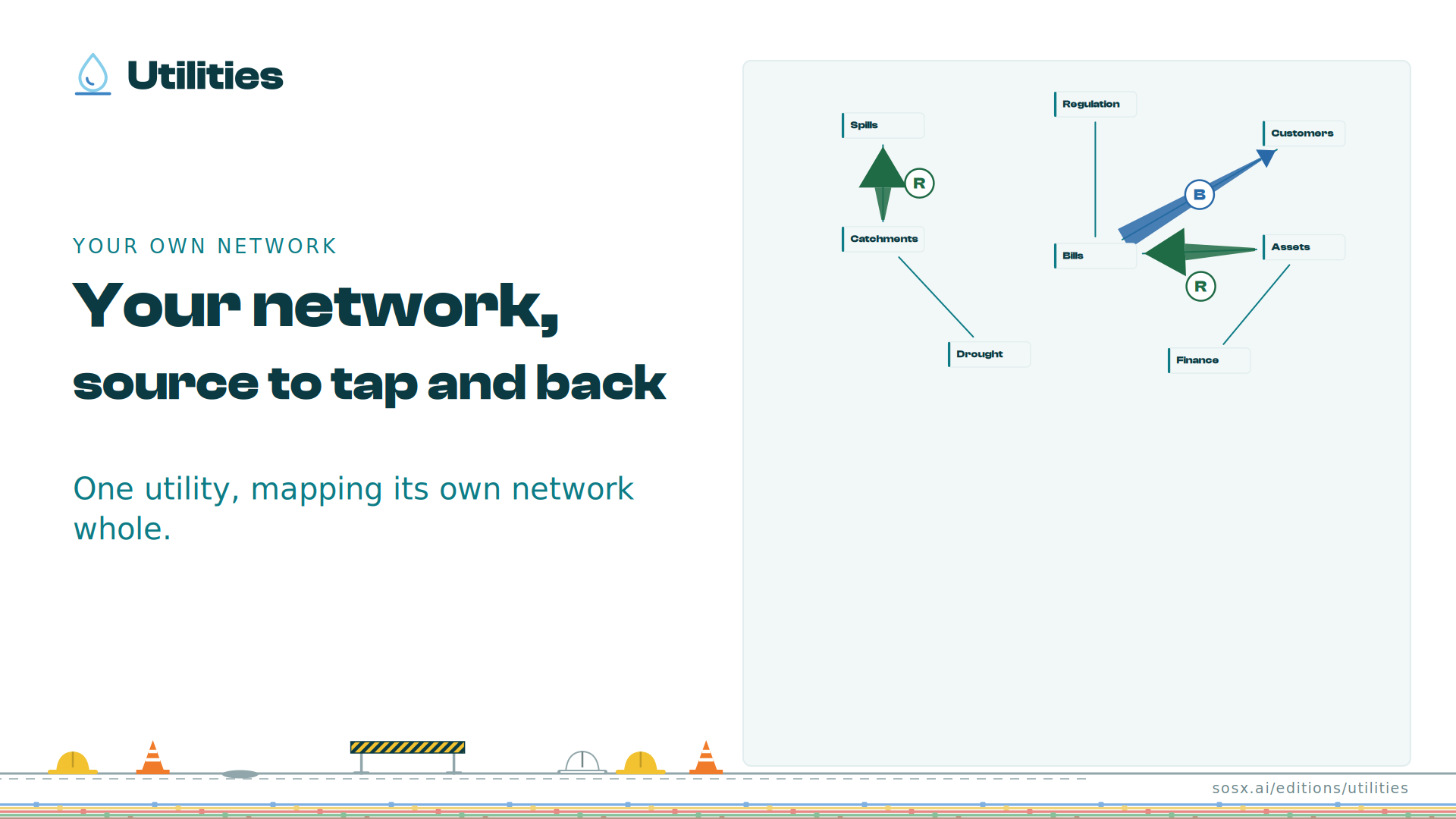
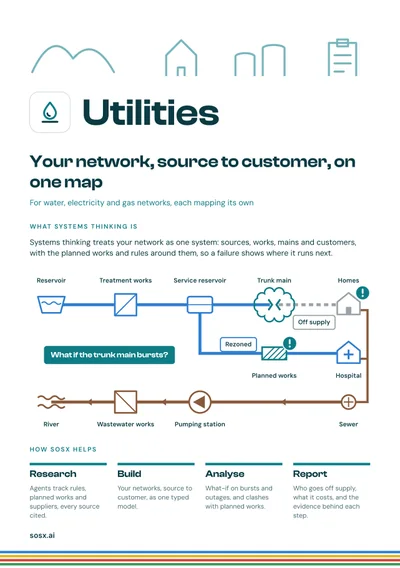
A utility maps its own network as one living model, from source to customer: assets, catchments, works, customers, finances and regulation, connected and questioned directly.
The problems it solves
- “A trunk main bursts, and the phone calls tell us which customers depended on it.”
- “Assets, customers, finance and regulation each live in a different team’s model.”
- “Three companies dig up the same street in the same year.”
- “We can’t say what one programme does to bills and resilience at once.”
SOSX for Utilities: Your network, source to customer, on one map
See SOSX for Utilities at work
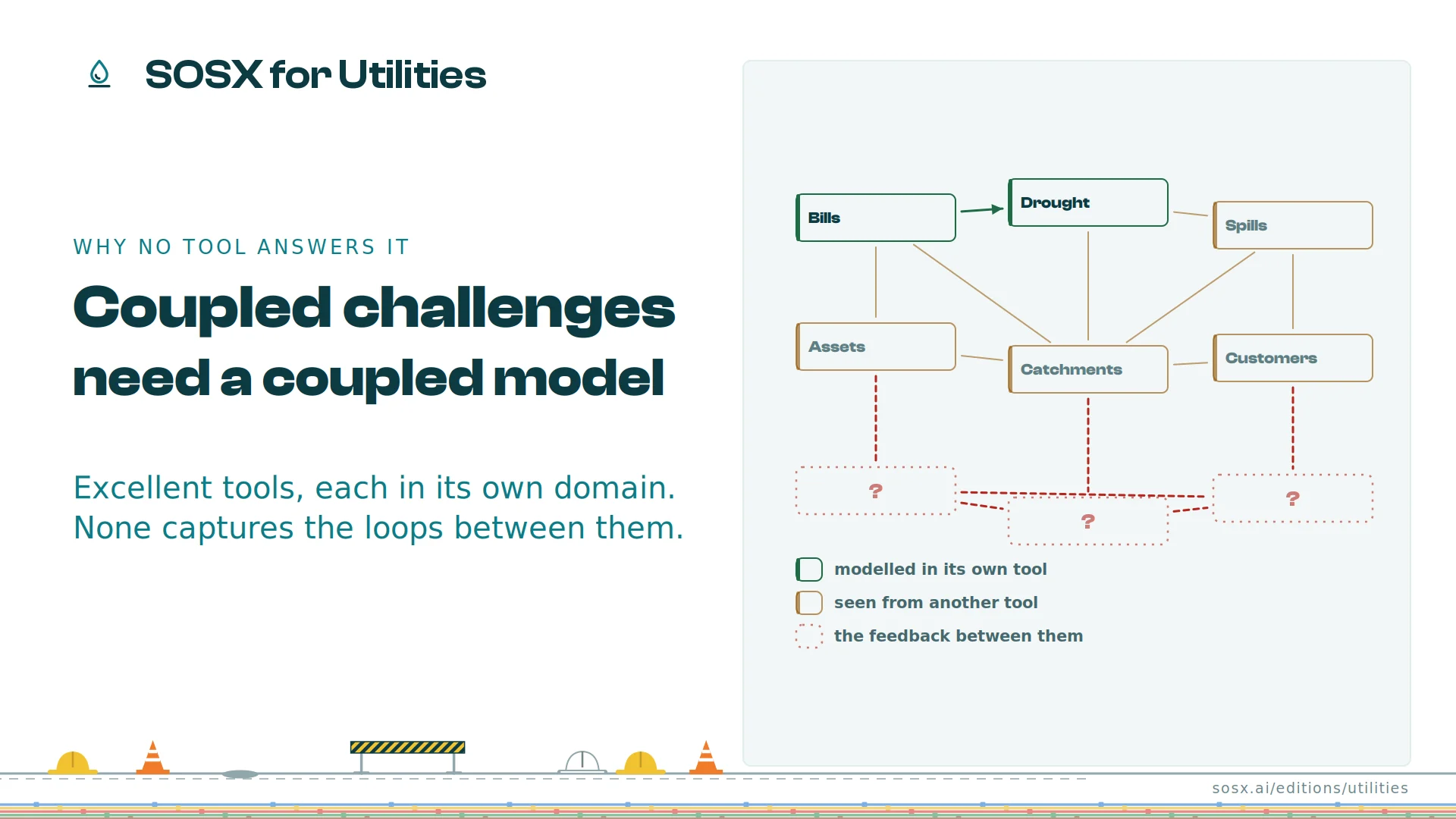
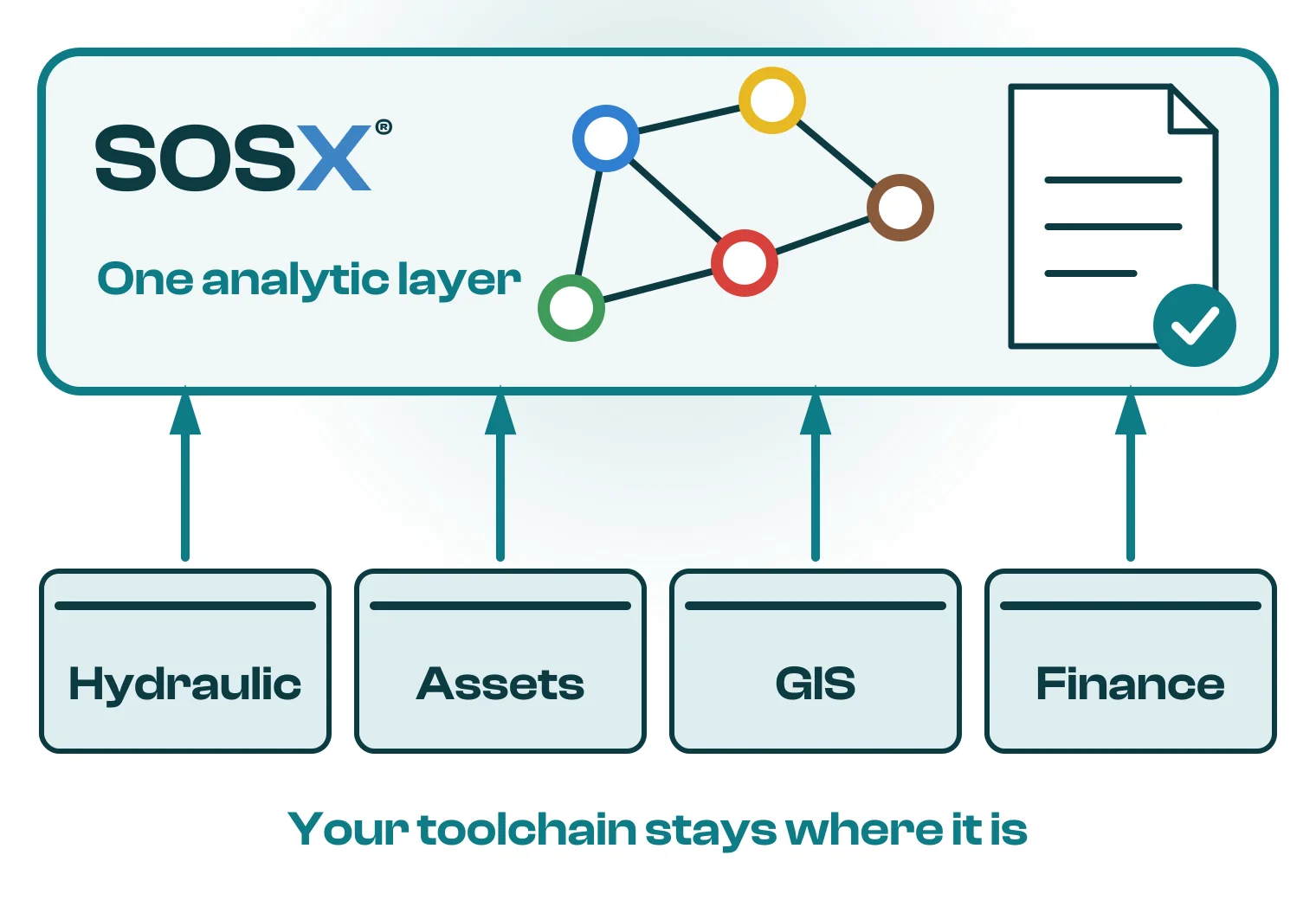
Each tool is excellent in its own domain; the feedback between them is the gap. 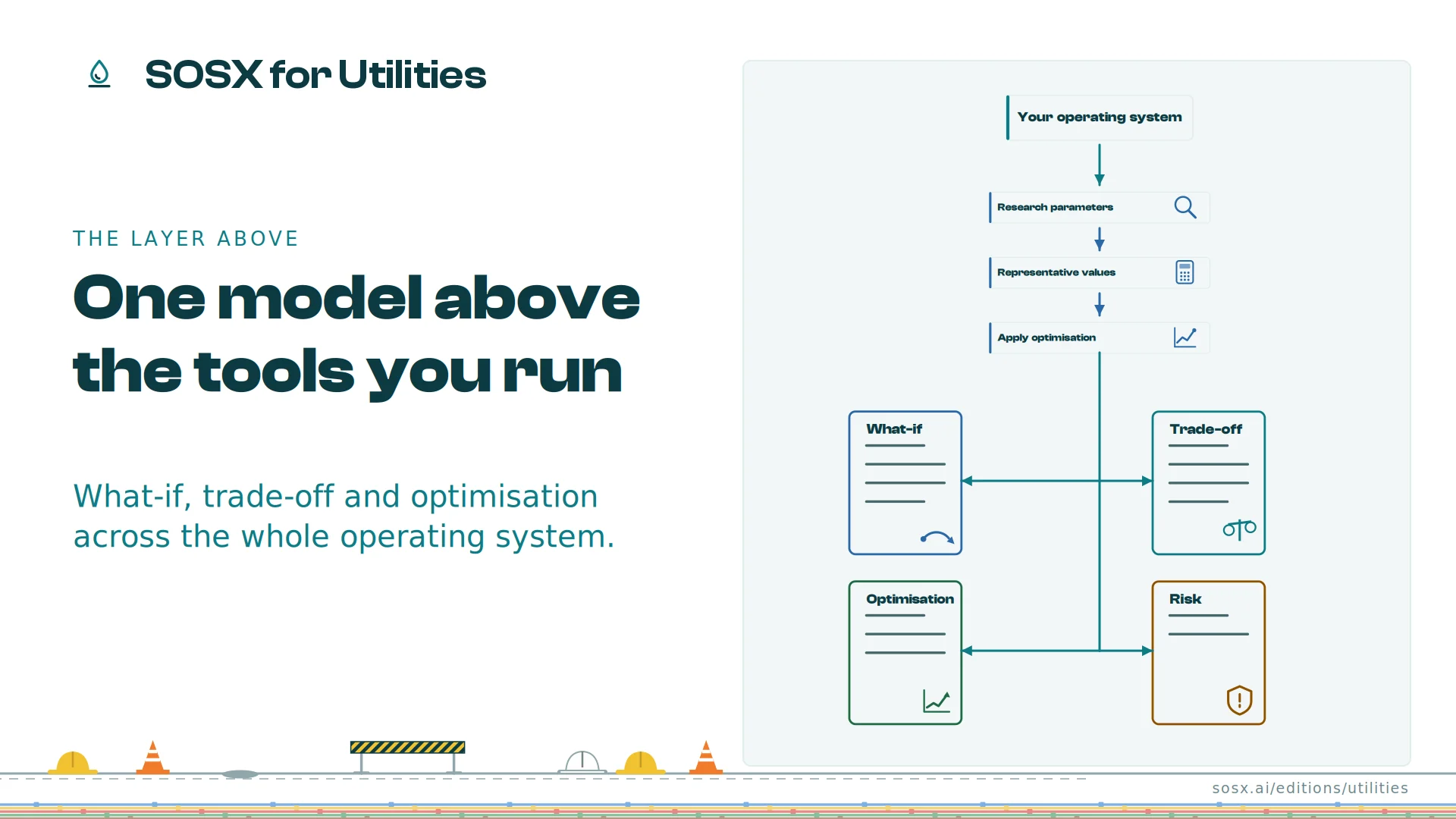
One model above the tools you run, analysed as a whole. 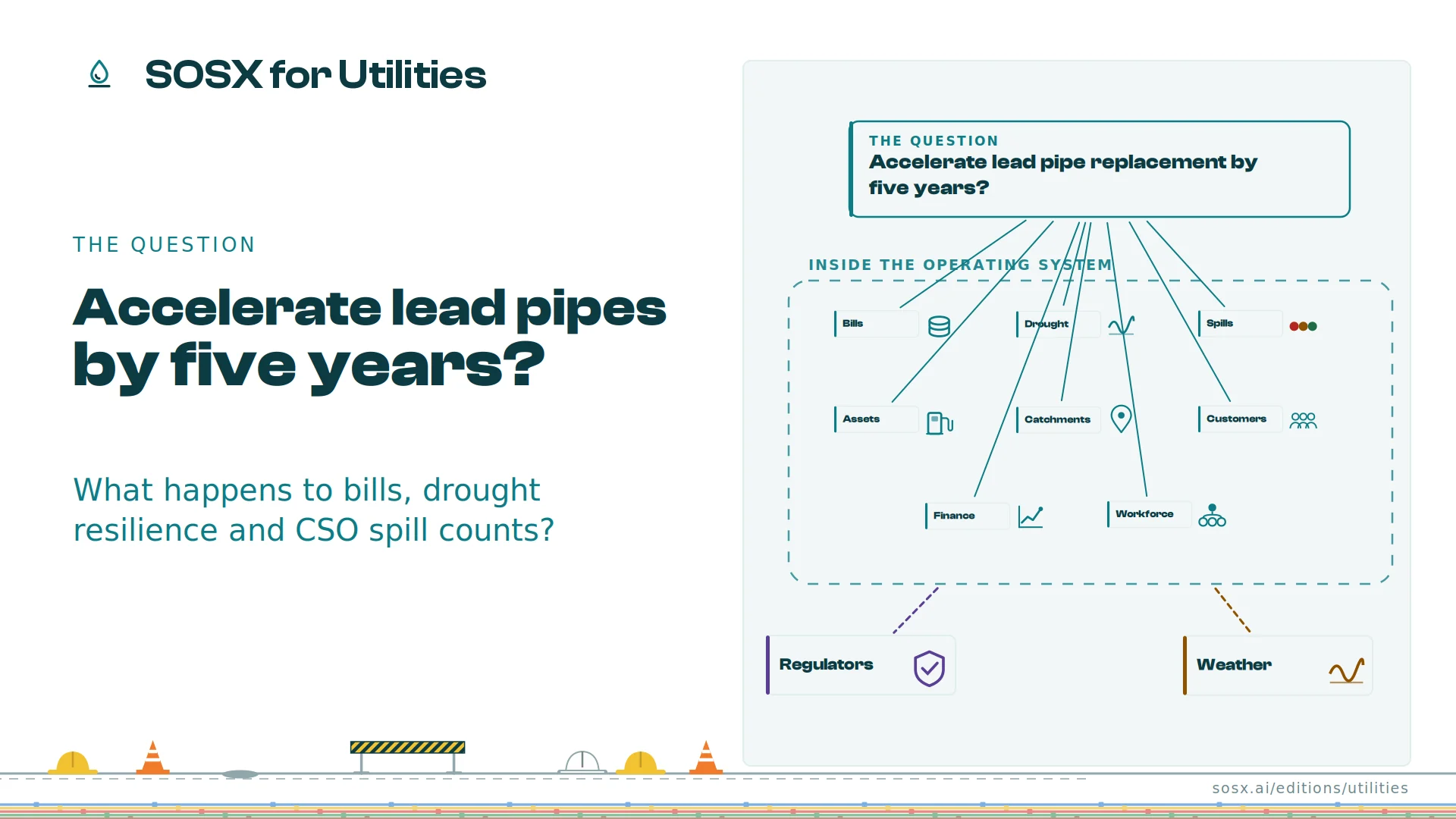
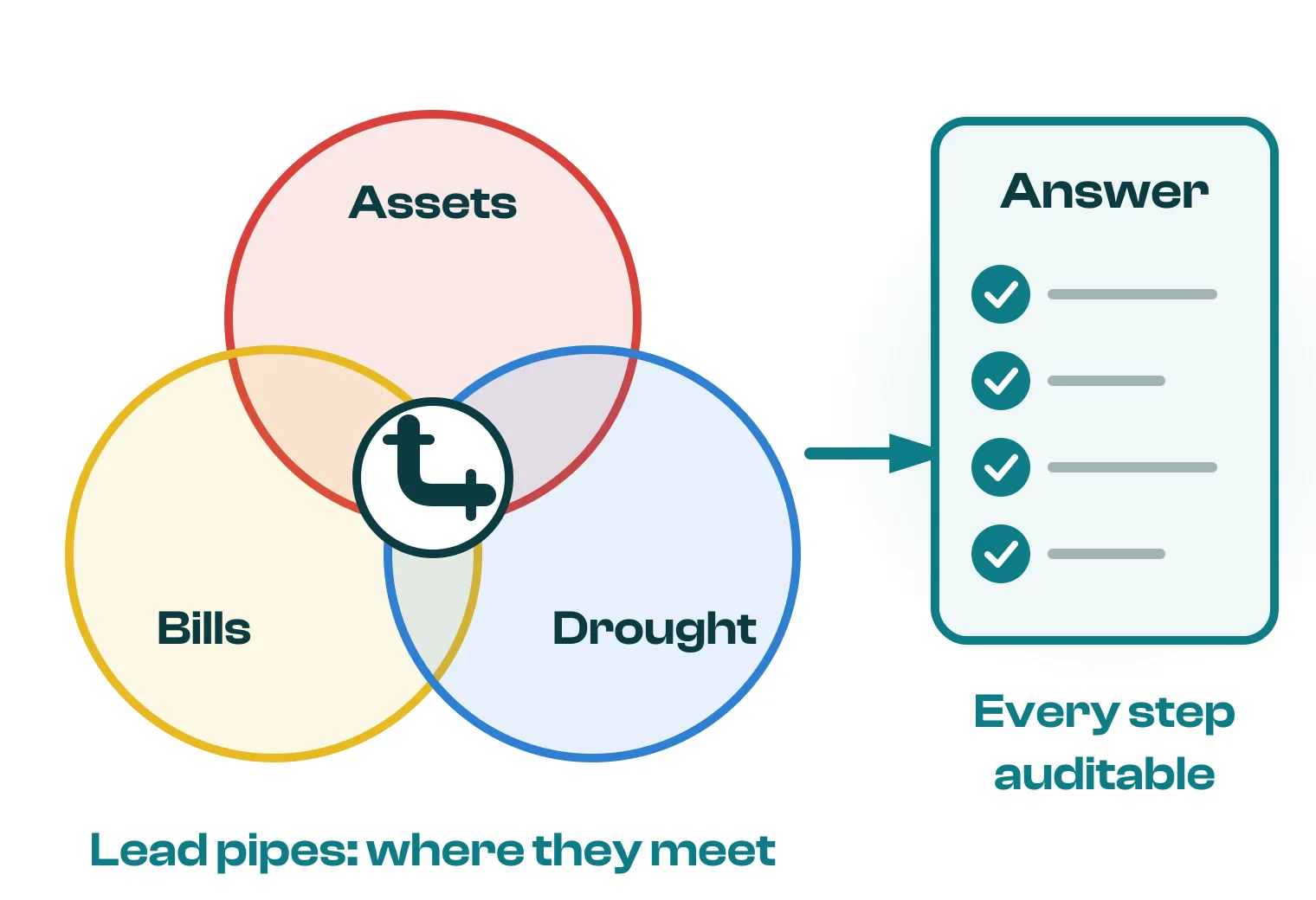
One question reaches across bills, drought, spills and the assets behind them. 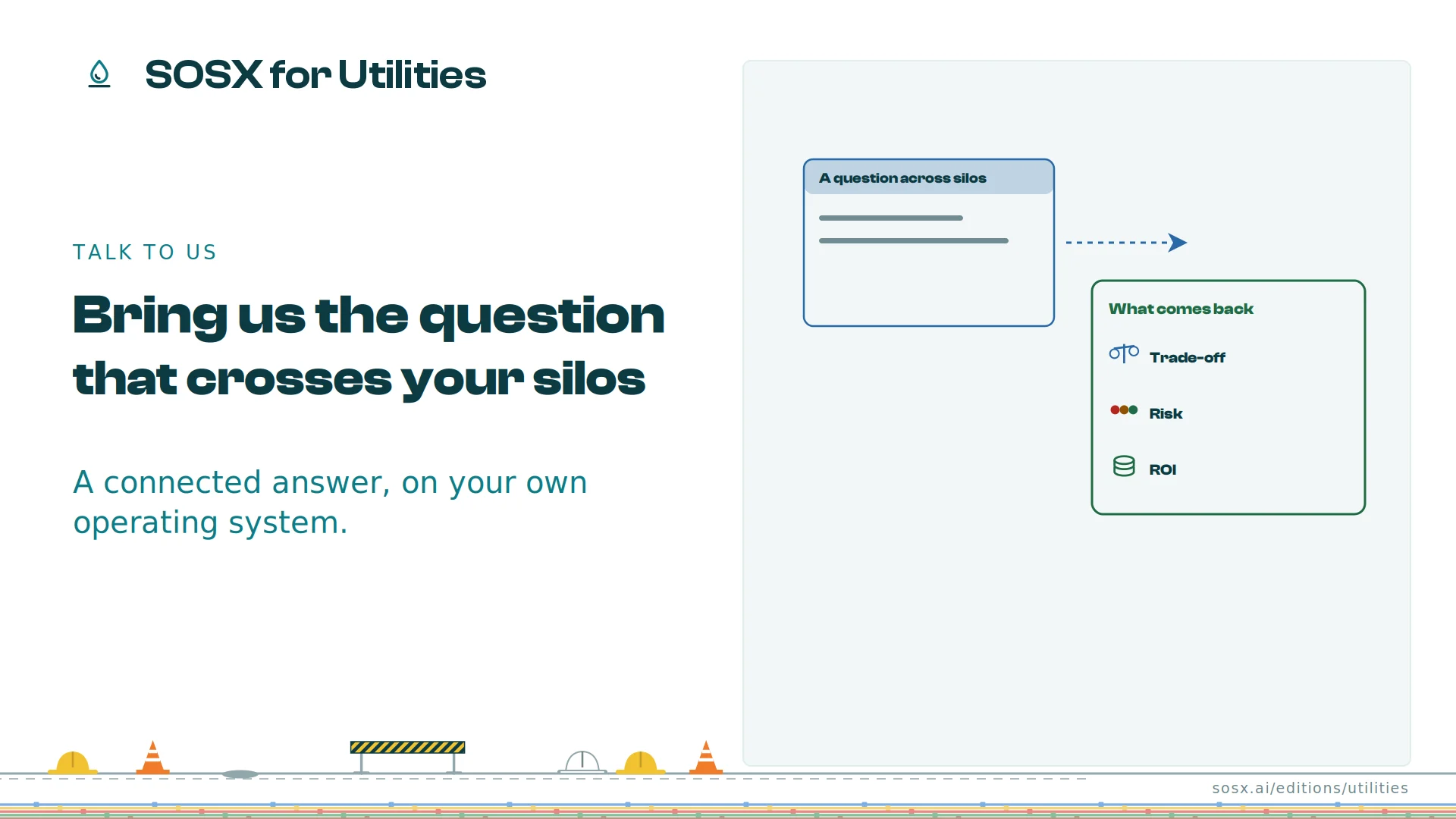
A connected answer to the question that crosses your silos.
How SOSX helps
Research
Specialised agents research the question, every claim citing a source.
Build
One typed, connected network, every value with its units and confidence.
Analyse
What-if, feedback loops, dependencies, trade-offs, risk and ROI.
Report
SWOTs, risk registers and decision reports, red-teamed before you see them.
The detail
For when you want the whole argument.
Read moreWhat SOSX for Utilities does
Imagine your entire operating system (assets, catchments, customers, finances, regulation) as one living, connected model, and then ask it the question your siloed toolchain can't answer: "what happens to bills, drought resilience and CSO spill counts if we accelerate the lead pipe replacement programme by five years?", answered auditably, in hours rather than weeks.
That is what a utility does with a living model of its own network, and it is what SOSX for Utilities is. Each utility maps its own system: a water company its network from source to tap, including the wastewater return; an electricity or gas network its own, from source to customer. Around that network sit its planned works and street works, its assets, its customers, and the regulation and finances wrapped around them, so a question that crosses asset health, demand, compliance and cost is answered in one model rather than four.
Read moreThe discipline: how the sector already works a mess
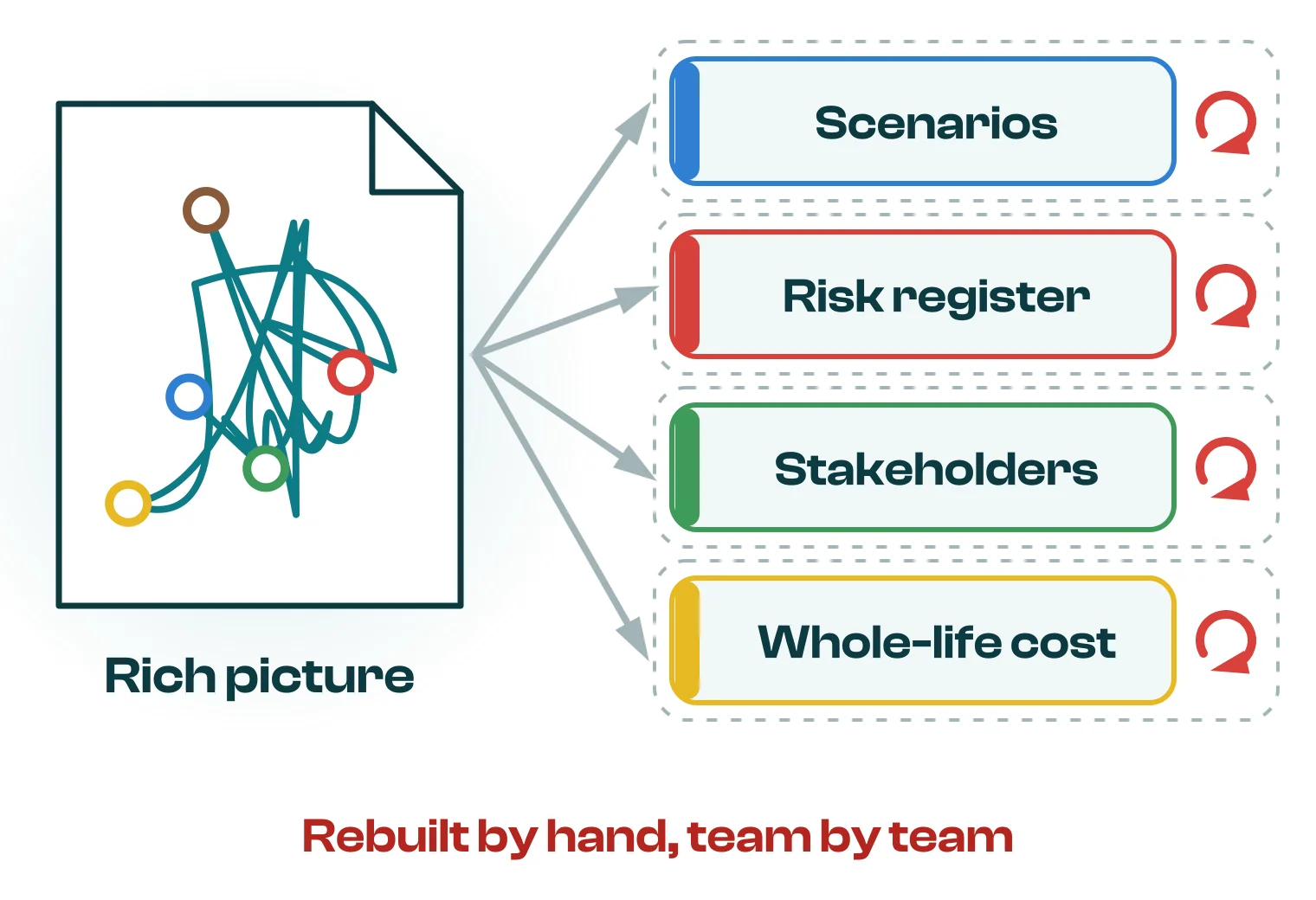
Utilities are not short of method, and none of what follows requires us. When a problem is a genuine mess rather than a well-posed question, the sector has soft systems methodology and the rich picture, Checkland's work from 1981, for getting the mess onto one sheet before anyone models anything. For the long horizon there is scenario planning in the tradition Wack described in 1985: coherent, argued futures rather than a high-medium-low band around today, and adaptive pathways with decision points marked on them. Forecast with a stated margin of error. Cost the whole life and put the social value in, not beside. Keep a risk register that gets re-scored when the parameters move rather than annually. Map the stakeholders by power and interest (Freeman's stakeholder framing, and Mendelow's grid) and be honest with the results: Lukes' account of power is the reminder that consultation is not consent, and that the item never put on the agenda is part of the decision too.
Every one of those is done by hand in the sector today, by people who know their catchments far better than we do. What makes it hard is that each lives in a different team, a different model and a different unit, and that the whole thing has to be rebuilt each time an assumption moves. The expensive part is not drawing the model; it is building it and keeping it true across all of them at once.
Read moreCoupled challenges need a coupled model
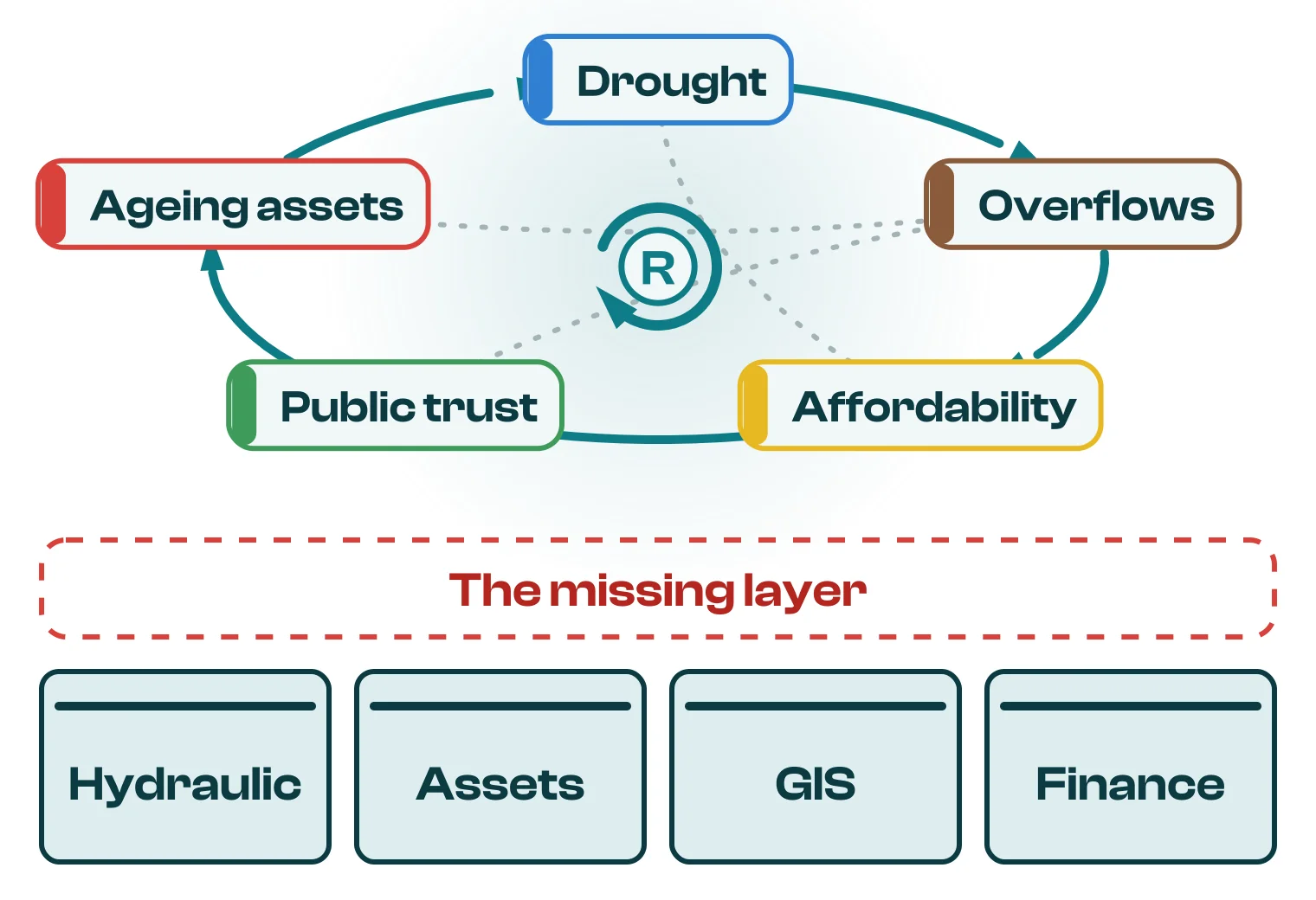
We see the sector's long-horizon challenges (climate resilience and drought, storm overflows and river health, asset deterioration, affordability, public trust) as systemically coupled, which is exactly the shape of problem SOSX exists for. Today those challenges are worked in silos: hydraulic models, asset registers, GIS, financial and regulatory models, each excellent at its own domain, none capturing the cross-domain feedback loops between them. The gap between the sector's 2050 ambitions and today's toolchain is that missing connective layer.
Read moreA unifying analytic layer above the existing toolchain
SOSX sits as a unifying analytic layer above the existing toolchain, not a replacement for any of it: the models and registers you already run stay exactly where they are. A water company builds its operating system as a connected graph, then runs evidence-grounded what-if, trade-off and optimisation analyses across the whole system, through the five-phase pipeline (Scope, Research, Parameterise, Analyse, Report) and more than fifty specialised AI agents, with every claim citing a catalogued source, and every answer carrying its audit trail.
Read moreWhy the lead-pipe question matters
Take the signature question above apart and you can see why no single tool answers it. Lead pipe replacement is an asset programme; bills are a finance and affordability question; drought resilience and CSO spills live in hydraulic and environmental models. The question is only answerable where those domains meet, and the answer is only usable if every step of it is auditable. That is the whole proposition of SOSX for Utilities: cross-domain answers a strategy team can stand behind, in hours rather than weeks.
Free to download
Go deeper
If this is the model you wish you had
If you own a long-horizon question that crosses your silos, bring it to us and let's have a chat about what a connected answer looks like on your own operating system.
Send us your question and let's have a chat.